Deep-seated serenity permeated the air. The old and unassuming abode of my grandparents, though modest, was held dear by all the members of our family. My grandfather was a man of few words but all his grandchildren, including myself, held a profound affection for him in their hearts. He stood as the focal point of our extended family. All his 10 grandchildren eagerly gathered around him to hear his stories of resilience during the Japanese Colony Era and the Korean War. He taught me lots of things including how to button a shirt, properly hold chopsticks, and most importantly, how to be resilient. For several decades, he owned a few businesses. Honestly, my grandfather wasn’t particularly skilled in sales, and none of his business ventures were exceptional. Nonetheless, his resilience was so profound that even his competitors acknowledged it. It was this resilience that motivated him to wake up before sunrise every day, praying for each and every member of his extended family, while seeking divine wisdom and strength. He always expressed gratitude for what he had, what he could accomplish, and the dreams he aspired to fulfill. Until his untimely passing due to complications of a stroke, he radiated an abundant well of love, grace, and wisdom within the family.
My mom and I often exchange light-hearted jokes about two seniors living under the same roof. My 13-year-old Golden Retriever baby, who has lost a considerable amount of muscle in his hind legs, takes twice as long to complete his routine walks. This upcoming autumn marks the official entrance of my mom into the “senior club” as she turns 65. Although her health is generally good, she humbly admits that her agility has diminished compared to earlier times.
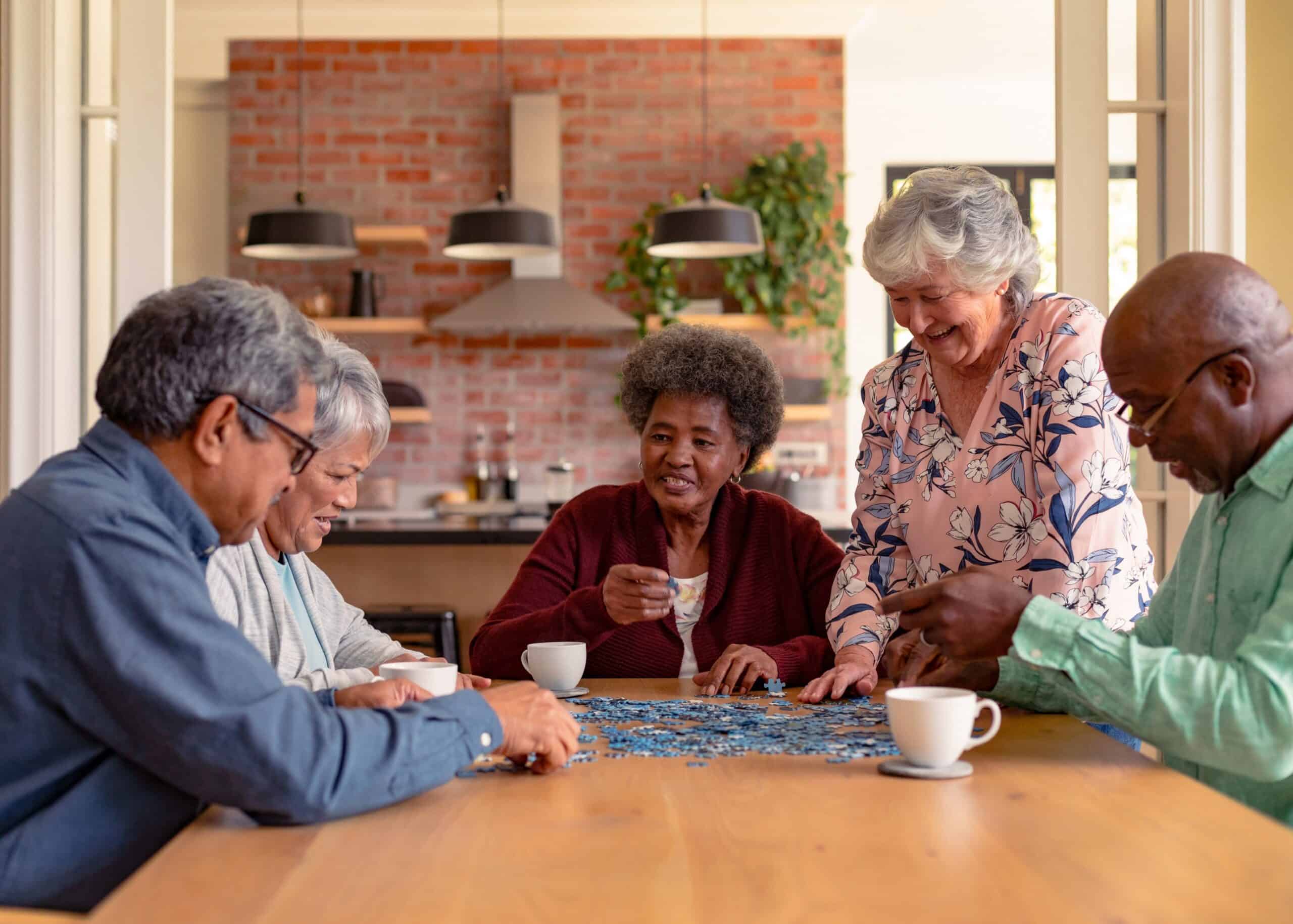
Each time I am confronted with the gravity of their advancing ages, I think of my grandfather. Because he had always been my gramps, I thought being a senior was somehow a fixed stance back then. Having witnessed my mom and furry baby whom I had thought would never age have slowly yet steadily entered, now I finally understand that senior years are just a part of life that all of us will eventually encounter. Just like other parts of life, it deserves respect and celebration.
Strolling through the bustling downtown or a shopping center, you will soon find yourself overwhelmed by a frenzy of marketing messages fiercely competing for your attention. From clothing, jewelry, cosmetics, and sports equipment to nutritional supplements, however, a common thread seemingly emerges: Youth. Young, slim women with firm, flawless skin are typical models in those messages. They aggressively advertise how their products can give customers back their lost youth. How they can magically transform them into looking younger. This underlying implication subtly yet clearly highlights an unspoken reality: As a society, we have marginalized the concept of aging.
This is not an anomaly: In history, aging has long been frowned upon and looked away. Old age was often regarded as a period of withdrawal in which the elderly are to separate themselves from the rest of the world in preparation for death. Sigmund Freud, who left immense influence in Psychoanalysis, said, “Near or above the age of fifty the elasticity of the mental processes, on which the treatment depends, is as a rule lacking – old people are no longer educable”. Fortunately, a rich body of modern studies has successfully disapproved of this bold statement. For example, one study of air traffic controllers found that despite thirty-year-olds exhibiting better memory performance, their sixty-year-old counterparts performed equally well in emergency situations. (340, The Social Animal)

Modern neuroscience is constantly revealing new insights into the nature of aging and its distinct qualities. Yet, if we continue to stigmatize old age with negative stereotypes such as inability, burden, or even uselessness, we will soon find ourselves in serious trouble when it comes to effectively addressing the needs of an aging society. Thanks to advanced nutrition and medicine, life expectancy has been steadily continuing to rise across the globe. In addition, most of the developed countries are witnessing a significant decline in birth rates. As a consequence, the population pyramid (a.k.a. age structure diagrams) of these countries now resembles a broader dome as opposed to the traditional pyramid seen in the past. According to statistics, by 2030, the population of people above sixty will reach 26 percent in the United States, 28 percent in the United Kingdom, 34 percent in Germany, and 38 percent in Japan. Very soon, the senior population will no longer be a marginalized minority. A healthy society is one in which all age groups coexist with mutual respect and understanding. We will need to grasp a better understanding of the needs and wants of gray members of our society for the betterment of everyone.

When I first read ‘The Old Man and the Sea‘ by Ernest Hemingway, in high school, I struggled to comprehend why the novel concluded with Santiago, an aged and experienced fisherman, dreaming of his youthful days and lions on an African beach. It felt like an abrupt ending. I questioned whether it reflected his sorrow and longing for the physical power he once possessed. However, my understanding has since evolved. I now interpret the dream as a symbol of Santiago’s inner spirit. Santiago just had a very long night battling a school of sharks and losing the marlin he had caught. Still, Santiago’s resilience remains unshaken as he vows to return to fishing. In this regard, Santiago himself becomes the lion on the African beach in his dream. He may take a longer time: One day, he will return triumphantly with a magnificent marlin.
I still remember my grandfather, despite the discomfort caused by stroke complications, was always the first one in the family to bring warmth and light into the room before dawn, reaching for his books and journals to pen his thoughts, on the current situation, plans for the future, and the deep desires and prayers within his heart. Family members, concerned about his health, tried to dissuade him. He was adamant though, until the day he became terminally ill. If I could go back to one of the days when he was alive, there is one thing I would choose to do differently. Instead of reminding him about his health issues, which he must have heard countless times before, I would sit beside him. Then I would ask about what he is writing about and give him my undivided attention. Even in his fragile state, my grandfather harboured dreams. Now I see it: He was making his best effort to live his life fully, just like any of us.
References:
Fletcher, D. P. (2018). Disrupters: Success strategies from women who break the mold. Entrepreneur Press.
Freud S. (1905/1964). On Psychotherapy. In Strachey J. (Ed. & Trans.), The standard edition of the complete psychological works of Sigmund Freud (Vol. 7, pp. 255–268). London: Hogarth.
Brooks, D. (2012). The Social Animal: The Hidden Sources of Love. Random House.
Story Sponsored by:

Call us, not your kids.
Quick tech support and other helpful services for older adults.
1-833-613-NEST(6378)